
If you search for the best sativa strains right now, you will find the same five names repeated across dozens of blogs: Sour Diesel, Jack Herer, Green Crack, Super Lemon Haze, and Durban Poison.
Those cultivars earned their reputation for a reason, but knowing a strain’s name tells you very little about whether it will help you write, brainstorm, or power through a project without leaving you scattered or unfocused.
At Hamilton’s Bud and Bloom, we think the more useful question is not which strain, but how to use one well enough that energy turns into actual output.
Why a List of Names Will Not Solve Your Real Problem
Most guides hand you a strain list and call it done. The problem is that the same cultivar grown by two different Oklahoma cultivators can deliver noticeably different experiences depending on terpene freshness, harvest timing, and curing quality.
A jar of Sour Diesel that has sat too long loses the limonene brightness that made it energizing in the first place, leaving you with a flatter, less useful high.
What decides whether your session supports creativity is the terpene combination working underneath the strain name, paired with how you pace your dose.
The Terpene Pairing That Separates Focus From Scattered Energy
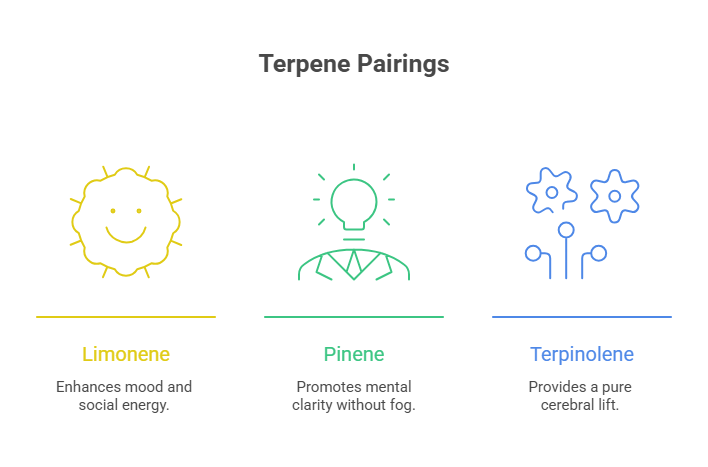
Most sativa content treats limonene, pinene, and terpinolene as interchangeable energy boosters. They are not. Each one nudges your session in a slightly different direction, and knowing the difference helps you pick a cultivar based on what kind of creative state you are chasing.
Limonene for Mood and Social Energy
Limonene brings the bright citrus aroma you smell in many of the best sativa strains, and it lifts mood and sociability. This is your pick for brainstorming with others or warming up before a creative task that benefits from a relaxed, talkative state.
Pinene for Mental Clarity Without the Fog
Pinene supports alertness and may help counteract the short-term memory fog some patients notice with high-THC products. If your creative work depends on holding multiple ideas in your head at once, a pinene-forward cultivar keeps you sharper for longer.
Terpinolene for Pure Cerebral Lift
Terpinolene shows up less often as a dominant terpene, but when it leads a profile, the effect feels more floaty and imaginative. This is the one to reach for during open-ended creative exploration rather than focused output.
Contact us today to talk about finding the right terpene profile and cultivar for your goals.
How to Pace a Sativa Session So You Stay Productive
This is the part almost no blog addresses directly. The best sativa strain session that starts strong can tip into overstimulation within twenty minutes if you keep consuming past your sweet spot, and that overstimulation is what makes you feel scattered instead of inspired.
- Take one small inhalation and wait a full ten minutes before deciding whether you need more.
- Avoid stacking a second dose during the first wave, since the peak has not fully arrived yet.
- Keep a glass of water nearby, since sativa-dominant sessions can dry out your mouth and pull focus away from your work.
- Set a timer for your creative block so you are not relying on the high alone to keep you on track.
|
Goal |
Terpene to Look For |
Best Format |
|
Social brainstorming |
Limonene |
Flower or preroll |
|
Solo-focused work |
Pinene |
Vaporized flower |
|
Open creative exploration |
Terpinolene |
Flower |
|
All-day sustained energy |
Balanced limonene and myrcene |
Tincture |
Matching Format to the Length of Your Creative Window
If you only need an hour of energy, smoked or vaporized flower gets you there fastest and lets you taper off cleanly once your session ends.
If you are planning a full afternoon of work, a low-dose tincture offers a steadier, longer curve without the spike-and-drop pattern that flower can produce. You can browse our current flower and tincture selection to compare what is freshest before you commit to a format.
Why Freshness Matters More for Sativas Than You Might Expect
Limonene, pinene, and terpinolene are lighter, more volatile terpenes than the heavier myrcene found in most indicas. They degrade faster when a flower sits in a poorly sealed jar or under bright light.
A cultivar that should feel sharp and energizing can taste flat and deliver a duller, less useful effect if it has been sitting too long. Ask your budtender about harvest dates before choosing your best sativa strains for the week, since freshness affects this category more than most patients realize.
Final Word
Finding the best sativa strains for your creative work is less about memorizing a list and more about matching terpene profile, format, and pacing to the kind of energy you need.
Whether you are chasing sharp focus, social brainstorming energy, or open-ended inspiration, the right combination makes the difference between a productive afternoon and a scattered one.
Our team at Hamilton’s is ready to walk you through what is freshest on our shelves right now. Stop by Hamilton’s Bud and Bloom and let us help you find the cultivar that fits your requirements.
FAQs
Can a sativa make me anxious instead of creative?
Yes, especially at high doses or with overly limonene-heavy profiles if you are sensitive to stimulation. Starting low and choosing a pinene-forward option can help you avoid that edge.
Is a higher THC percentage better for creativity?
Not necessarily. Terpene profile is more important than raw potency for a clear, functional creative session, since a high-THC strain with poor terpene balance can feel scattered rather than inspired.
How long does a sativa session typically last for daytime use?
Smoked or vaporized flower usually lasts one to three hours, while a tincture can stretch that window to four or five hours with a gentler curve.
Should I eat before a sativa session?
A light meal beforehand helps prevent lightheadedness and keeps your energy steady through your creative block, without crashing partway through.
Can I combine two different sativa cultivars in one session?
Some patients do this to blend terpene effects, but it makes dosing harder to judge. If you are new to this strategy, try one cultivar fully before experimenting with combinations.