
If you have been relying on store-bought edibles to manage your dose, learning how to make THC gummies at home gives you something commercial products rarely offer: complete control over potency, ingredients, and flavor.
Most patients who turn to homemade gummies do so because the mass-market options are either underdosed for their tolerance or formulated with ingredients they want to avoid.
We put this guide together to walk you through the decisions that actually matter, starting with infusion accuracy and ending with the storage habits that protect every batch you make.
Why Your Infusion Choice Determines Every Outcome
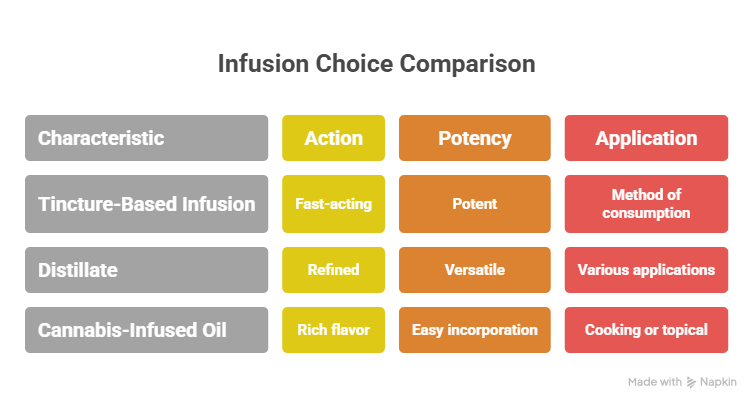
Before you touch a mixing bowl, your infusion method needs to be settled. This decision shapes dose consistency more than any other variable in the process.
Tincture-Based Infusion
A tincture is the most precise option because the milligrams per milliliter are already calculated. You measure, you add, and your dose math is clean. This works especially well for patients targeting a specific therapeutic dose per piece.
Distillate
Distillate is flavorless, already activated, and highly concentrated. A single gram typically contains 900 mg or more of THC, so even small measurement errors produce large potency swings. A precision dropper and milligram-accurate scale are non-negotiable.
Cannabis-Infused Oil
Coconut oil infused with decarboxylated flower is the most forgiving method for beginners, though fat-based infusions are harder to distribute evenly, which increases the chance of hot spots where one piece carries substantially more THC than another.
Calculating Your Dose Before the First Ingredient Goes In
Knowing how to make THC gummies accurately starts with arithmetic, not cooking.
Take the total milligrams of THC in your infusion and divide by the number of pieces your recipe produces. A 300 mg tincture split across 30 gummies yields 10 mg per piece.
Write that number down, test one piece, and wait a full two hours before drawing any conclusions about strength.
|
Patient Experience |
Suggested Dose Per Gummy |
Wait Before Redosing |
|
New to edibles |
2.5 to 5 mg |
2 hours minimum |
|
Occasional use |
5 to 10 mg |
90 minutes minimum |
|
Regular use |
10 to 20 mg |
60 to 90 minutes |
|
High tolerance |
20 to 50 mg |
60 minutes, then assess |
The Ingredients That Affect Dose Distribution and Texture
Gummy formulas are not interchangeable. Each ingredient plays a role beyond flavor, and substitutions often produce uneven dosing rather than just a different texture. This is something to keep in mind when learning how to make THC gummies at home.
- Gelatin over pectin: Gelatin distributes oil-based infusions more evenly through the mixture. Pectin is the right choice for vegan batches paired with tincture rather than infused oil.
- Corn syrup or glucose: Prevents crystallization and keeps gummies pliable for weeks. Skipping it produces gummies that harden into an unpleasant consistency within a few days.
- Citric acid: Adds brightness and masks any residual cannabis flavor in the finished gummy. Use sparingly, as too much creates a coating that pulls moisture from the gummies over time.
- Temperature during mixing: Keep your mixture below 160 degrees Fahrenheit. Sustained heat above that threshold degrades THC. Add your infusion after the gelatin dissolves and the mixture cools slightly.
The Stirring Step That Most Recipes Underemphasize
Uneven stirring is the single most common cause of inconsistent potency. Stir continuously for at least 60 seconds after adding your infusion. For oil-based infusions, an immersion blender for 20 seconds achieves the distribution that manual stirring rarely accomplishes.
If you want to see how professionally produced gummies handle dose consistency before you build your own process, the Watermelon 500mg CBD and 100mg THC Vegan Gummies are a well-formulated benchmark.
Molds, Set Time, and Getting Each Piece the Same Size
Silicone molds in a uniform shape are non-negotiable. If gummies vary in size, they vary in dose. Fill each cavity to the same level using a dropper or squeeze bottle rather than pouring from the pan.
Storage Conditions That Protect Both Potency and Safety
Store finished gummies in an airtight, opaque container in the refrigerator. Terpene degradation and THC potency loss both accelerate with light and heat exposure.
If you plan to keep a batch longer than three weeks, freeze individual pieces and thaw only what you need per session. Label every container with the date, dose per piece, and infusion source.
If you used a dispensary product like the Elderberry Indica Gummies 100MG THC and 60MG CBN as a reference, note the comparison so you can refine your formula.
Keep all homemade edibles in child-resistant, clearly labeled storage at all times.
Conclusion
Once you understand the variables that actually matter, how to make THC gummies becomes a simple and genuinely rewarding process.
Accurate infusion, careful dose math, proper stirring, and smart storage turn a basic recipe into a consistent, personalized product. At Hamilton’s Bud and Bloom, we stock the tinctures, concentrates, and distillate options that give your homemade batches a reliable, lab-tested foundation.
Stop by our Broken Arrow dispensary or browse our live menu and let a budtender help you choose the right infusion source for the gummies you want to make.
FAQs
Can I adjust the flavor of homemade THC gummies without affecting potency?
Yes. Oil-soluble flavorings blend most cleanly with fat-based infusions, while water-soluble flavorings pair better with tincture. The type of flavoring does not affect THC content.
Why did my homemade gummies come out grainy or crystallized?
Crystallization happens when the sugar concentration is too high, or no corn syrup was used. Adding glucose or corn syrup to your recipe prevents this consistently.
How do I know if my homemade gummies are safe to eat after two weeks?
Check for any visible mold, off smells, or unusual texture if you’re experimenting with recipes like how to make THC gummies at home. Refrigerated gummies stored in airtight containers are generally safe for three to four weeks.
Does the strain used for infusion affect how the gummies feel?
Yes. Indica-dominant infusions tend to produce more sedating, body-focused effects in edible form. Sativa-dominant infusions lean toward mental lift and energy, though the liver metabolism process blunts some of that distinction.
Can I use a cannabis beverage mix-in instead of a tincture for gummy infusion?
Nano-emulsified beverage mix-ins are water-soluble and do not bind to gelatin the same way tinctures do. They work in pectin-based formulas but may cause separation in gelatin gummies.