
If you have ever cracked open a jar of cannabis and immediately thought of fresh citrus or lemon zest, you have already experienced the limonene terpene effects without necessarily having a name for them.
Limonene is one of the most recognizable terpenes in cannabis, but it is also one of the most misunderstood. At Hamilton’s Bud and Bloom, we pay close attention to terpene profiles because they are the difference between a product that fits your session and one that just has an impressive THC number on the label.
Why Limonene Does More Than Just Smell Like Citrus
Most patients encounter limonene terpene information framed entirely around aroma: bright, zesty, clean. That is accurate but incomplete. What makes this terpene genuinely worth understanding is how it interacts with your endocannabinoid system and the other compounds already present in your product.
Limonene is a monocyclic monoterpene found abundantly in citrus fruit rinds. In cannabis, it accumulates in the trichomes alongside cannabinoids like THC and CBD. Research suggests it may influence serotonin and dopamine activity, which helps explain why high-limonene cultivars tend to feel mood-elevating rather than sedating.
What that means for your session is that limonene is not a passive passenger. It actively shapes the character of your highs, and understanding that helps you make better choices at the dispensary.
How Limonene Terpene Effects Shift Depending on What It Is Paired With
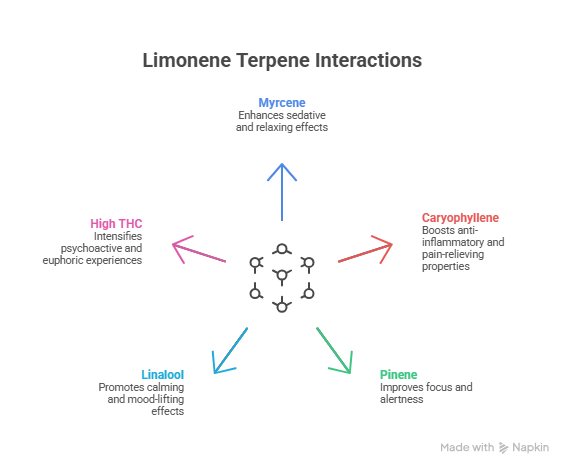
Limonene does not behave the same way across every product. Its effects shift noticeably depending on which other terpenes and cannabinoids it appears alongside, a concept known as the entourage effect.
|
Limonene Paired With |
What You Can Expect |
|
Myrcene |
The citrus brightness softens; relaxation becomes more prominent |
|
Caryophyllene |
Stress-buffering effects deepen; the mood lift feels steadier |
|
Pinene |
Mental clarity sharpens; the energizing quality of limonene intensifies |
|
Linalool |
Anxiety reduction increases; the overall experience becomes more calming |
|
High THC |
Euphoria amplifies; pacing becomes more important |
The Specific Limonene Terpene Properties That Make It Useful Beyond Recreational Sessions
Understanding what is limonene in weed from a therapeutic standpoint is increasingly relevant for medical patients who are selecting products with purpose rather than preference alone.
Current research, while still developing, points to several areas where limonene may offer meaningful support:
- Mood regulation: Limonene has shown interaction with serotonin pathways in preclinical studies, which may explain the consistent anecdotal reports of elevated mood and reduced emotional tension from high-limonene cultivars.
- Stress response: Patients who report feeling anxious from high-THC products sometimes find that limonene-dominant strains feel smoother and less likely to tip into discomfort.
- Antifungal and antibacterial properties: Limonene carries natural antimicrobial activity, which is part of why it is used broadly outside cannabis in food preservation and cleaning products.
- Digestive ease: Some research suggests limonene may support gastric health, though cannabis is not a delivery method designed for this specific application.
None of this is a medical claim about cannabis products specifically, and we always encourage you to consult a healthcare provider for condition-related concerns. But it does give you a framework for why certain cultivars feel the way they do.
How to Recognize High-Limonene Products Before You Buy
Knowing what to look for means you can start identifying limonene-rich options without relying entirely on staff recommendations, though our budtenders are always available to help you cross-reference.
Aroma Cues
High-limonene flowers have a sharp, clean citrus opening. It is less earthy and musky than Myrcene-heavy cultivars and less fuel-forward than Caryophyllene-dominant options.
If your first impression is bright and almost sweet-tangy, limonene is likely present at significant levels.
Lab Panel Placement
On a COA (certificate of analysis) or terpene panel, limonene appearing first or second on the list indicates dominance. Any reading above 0.5% is generally considered meaningful for effect contribution.
Cultivar Families That Commonly Express It
Strains with “lemon,” “citrus,” “tangie,” or “sour” in their names are frequently high-limonene expressions. This is not universal, but it is a useful starting pattern.
A product like the 1g Ecto Cooler Cartridge is a good example of a citrus-forward format where terpene expression matters to the overall experience.
Where Limonene Shows Up in Edibles and Why It Behaves Differently There
When you consume limonene through an edible, the terpene interacts with your system differently than it does through inhalation. Onset is slower, duration is longer, and the mood-elevating quality tends to feel more sustained rather than immediate.
Citrus-forward edibles that carry limonene alongside balanced cannabinoid ratios can create a smooth, uplifting experience well-suited to social settings or daytime use.
Options like Camino Watermelon Lemonade “Bliss” Gummies are formulated with this kind of intentional flavor and effect pairing in mind, making them worth considering when you want the limonene terpene effects delivered in a longer-lasting format.
The Bottom Line
Limonene terpene effects are not a side note to THC percentage. They are a core part of how your session feels, how your mood responds, and how well a product actually fits your intention.
Once you start reading terpene panels alongside cannabinoid content, your ability to choose the right product improves dramatically.
At Hamilton’s Bud and Bloom, we stock products with terpene transparency because we believe informed patients have better experiences. Explore our live menu today and find the highest-limonene options we currently carry!
FAQs
1. What is limonene in weed, and why does it matter?
Limonene is a naturally produced terpene found in cannabis trichomes that contributes to aroma, flavor, and effect, particularly mood elevation and stress reduction.
2. Do limonene terpene effects feel different in flower versus edibles?
Yes. Its effects through inhalation feel more immediate and sharper in their mood-elevating quality. Through edibles, the same terpene contributes to a more gradual, sustained experience because of how it is processed through the digestive system.
3. Which cultivars carry the highest limonene terpene concentrations?
Citrus-named strains like Lemon Haze, Tangie, and Super Lemon OG are historically strong limonene expressions. Checking the terpene panel directly is always the most accurate approach, as terpene levels vary by batch and grower.
4. Is the limonene terpene safe for all patients?
For most patients, the limonene terpene is well-tolerated and widely considered safe. Patients with citrus sensitivities or specific medical conditions should consult a healthcare provider first.
5. Can you taste the effects of the limonene terpene or only feel them?
Both. High-limonene products carry a distinctly bright, citrus-forward flavor that is noticeable on inhale and exhale. The effects you get are mood elevation, reduced tension, and mental brightness.