
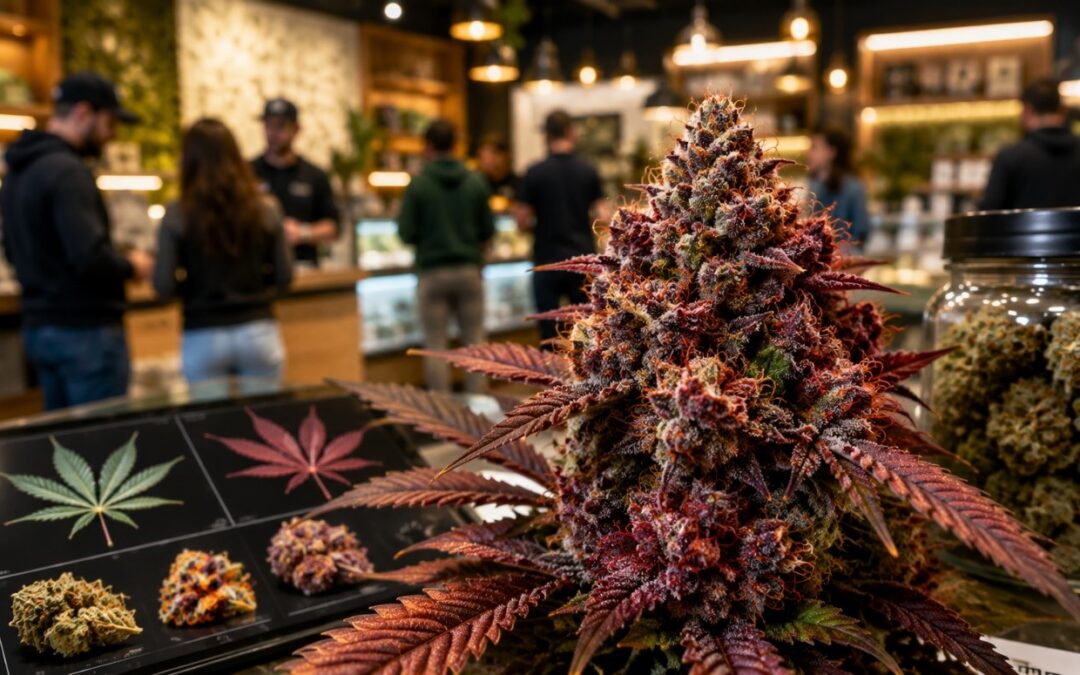
If you ask five dispensary budtenders where the Red Velvet strain came from, you will likely get three different answers, and all of them would be partially correct.
This cultivar carries one of the most genuinely contested lineage debates in modern cannabis, not because of sloppy record-keeping, but because multiple credible breeders produced meaningfully different plants and gave them the same name.
At Hamilton’s Bud and Bloom, we think understanding that breeding history is the most useful thing you can know before you buy your next jar.
Why Three Separate Lineages Exist Under the Same Name
The naming problem here is not accidental. Red Velvet became popular enough fast enough that multiple breeding operations developed their own version simultaneously, each reaching the same dessert-sweet profile through genuinely different genetic routes.
That kind of parallel development is unusual even in modern cannabis, where popular strain names get recycled constantly.
The three most documented versions currently circulating on dispensary menus are:
- Grandiflora Genetics x Cookies version: Lemon Cherry Gelato crossed with Pina Acai, commercialized through the Cookies brand out of the California Bay Area. This is the most widely cited version and tests between 24% and 29% THC.
- Cherry Pie x Burmese Thai version: Considered by some researchers to be the most historically consistent lineage reported, this cross blends the tart stone-fruit character of Cherry Pie with the exotic, landrace-influenced genetics of Burmese Thai.
- Orange Velvet x Redrum version: A third distinct cross that shares the name without sharing genetics with either version above, representing a completely separate breeding project that arrived at a similar flavor destination.
The practical implication for you as a patient is significant. Two jars labeled Red Velvet at different dispensaries may come from completely different genetic lines, which means expecting identical terpene profiles or effects from the name alone will lead to inconsistent experiences.
What Grandiflora Genetics Built and Why Breeders Pay Attention
The Grandiflora x Cookies version is where the breeder interest concentrates most heavily, and its parent genetics explain why. Lemon Cherry Gelato is itself a sought-after cultivar known for exceptional trichome density and a complex layered terpene profile.
Crossing it with Pina Acai introduced tropical fruit-forward qualities that pulled the flavor profile away from the citrus-heavy gelato direction and toward something more rounded, creamy, and berry-adjacent.
Why Breeders Value This Genetic Combination Specifically
From a breeding perspective, the Lemon Cherry Gelato x Pina Acai cross offers two things breeders actively search for: expressive terpene diversity and visual phenotype appeal.
The deep purple and red-tinged hues that give the cultivar its name come from anthocyanin expression triggered by cooler temperatures during flowering, inherited through the Gelato side.
Breeders can select phenotypes that push that coloration further or pull toward more functional terpene traits depending on what their target market values.
That flexibility is rare. Most high-THC modern cultivars narrow as you select them, losing expression range in exchange for stability. This cross maintains meaningful phenotype variation, which is exactly what keeps breeders returning to it as a parent for new projects.
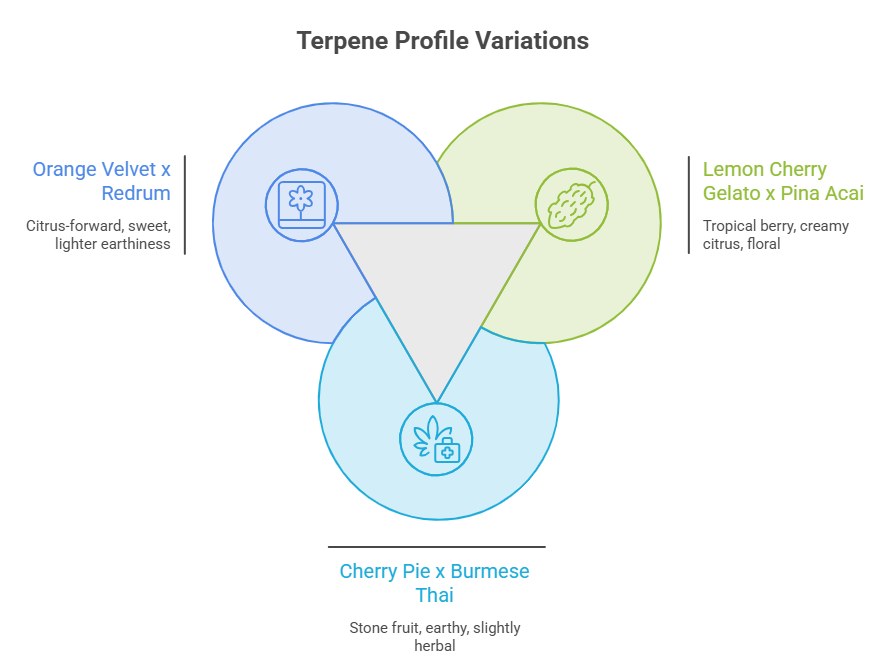
How Terpene Profile Varies Between the Three Versions
|
Lineage Version |
Dominant Terpenes |
Flavor Direction |
|
Lemon Cherry Gelato x Pina Acai |
Limonene, caryophyllene, linalool |
Tropical berry, creamy citrus, floral |
|
Cherry Pie x Burmese Thai |
Myrcene, pinene, caryophyllene |
Stone fruit, earthy, slightly herbal |
|
Orange Velvet x Redrum |
Limonene, terpinolene, myrcene |
Citrus-forward, sweet, lighter earthiness |
Knowing which lineage you are actually buying gives you a far more reliable prediction of your experience than the name alone.
What the Anthocyanin Trait Tells You About Growing Conditions
The deep red and purple coloring in quality Red Velvet strain flower is not guaranteed to appear in every batch.
Anthocyanins, the pigment compounds responsible for that color, only express visibly when the plant experiences cooler nighttime temperatures during the flowering stage. Growers who maintain a 10-degree Fahrenheit temperature differential between day and night during late flowering can push that coloration significantly.
When you see a batch of Red Velvet with pronounced purple and red hues, you are looking at a grower who managed their environment deliberately enough to bring that trait forward. That level of cultivation attention tends to correlate with better overall terpene management too, since both require the same environmental control discipline.
If you want to see what is currently in stock, browse our shop before your next visit to check freshness and availability.
Why the Lineage Ambiguity Works in Patients’ Favor
Here is the counterintuitive part of this conversation. Because Red Velvet has multiple credible lineage versions, Oklahoma cultivators growing it have had to distinguish their product by actual execution rather than name recognition alone.
A cultivar with a locked, famous lineage can coast on reputation. One with a contested origin has to prove itself in the jar every time.
The Red Velvet strain batches that earn consistent patient loyalty at Hamilton’s do so because they deliver on terpene expression and experience, not because of a breeder name on the label.
Closing Overview
The Red Velvet strain is more interesting than its dessert-sweet reputation suggests. Three competing lineages, a breeder collaboration that brought it national attention, and an anthocyanin color trait that signals cultivation quality all combine to make this a cultivar worth understanding before your next purchase.
Our budtenders at Hamilton’s Bud and Bloom can walk you through which version we currently carry and what to expect from it. Stop by our Broken Arrow location to ask questions before you visit, or come in and let us find the right batch for you.
Is there one original Red Velvet strain or multiple?
Multiple credible versions exist from different breeders. The Grandiflora Genetics x Cookies version using Lemon Cherry Gelato and Pina Acai is the most documented, but it is not the only legitimate lineage.
Does Red Velvet always look purple or red?
No. The anthocyanin coloration only develops when the plant experiences cooler nighttime temperatures during flowering. Not all grows produce that visual expression.
Why do two Red Velvet batches sometimes taste completely different?
They likely come from different lineage versions. Cherry Pie x Burmese Thai delivers more earthy stone fruit, while the Lemon Cherry Gelato cross leans tropical and creamy.
What THC range should I expect from this cultivar?
The Grandiflora version tests between 24% and 29% THC. Other lineage versions typically land between 20% and 25% depending on the specific cross and growing conditions.