
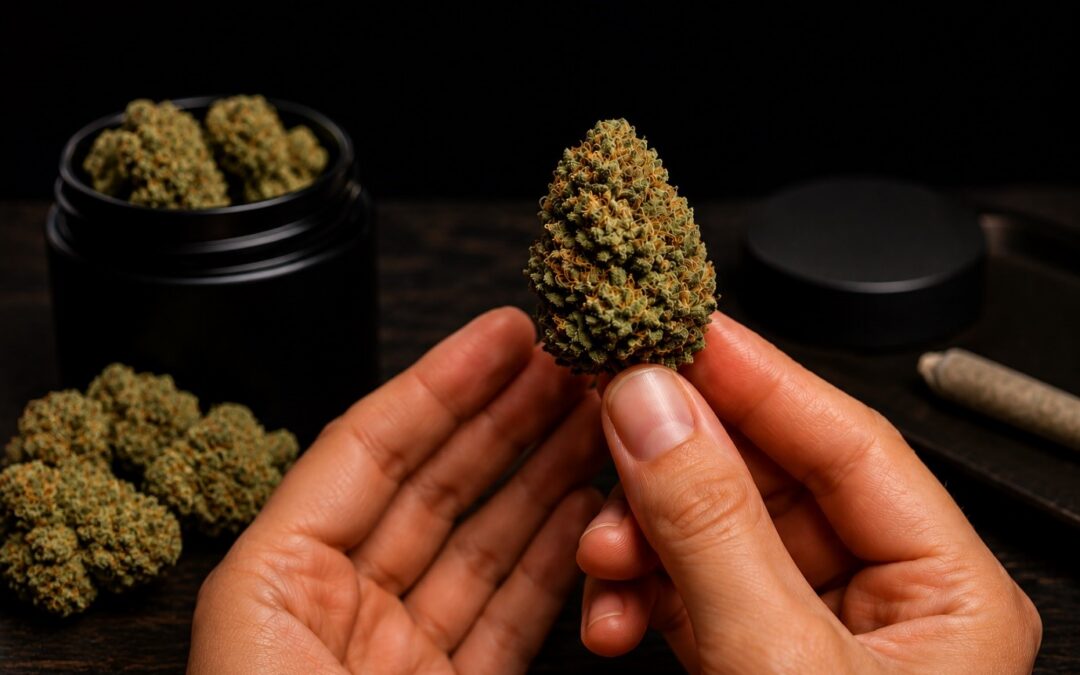
The Trop Cherry strain has built its reputation not through marketing but through repeat sessions. Bred by Relentless Genetics, a Colorado-based breeder known for obsessively preserving only the most expressive phenotypes from each cross, this 60/40 sativa-dominant hybrid routinely delivers an experience that feels more sativa-forward than its genetic split suggests.
That gap between the numbers and the reality is one of the most interesting things about it, and it is exactly what makes this cultivar worth understanding before your first session.
Why a 60/40 Sativa Acts Like Something Much Closer to Pure Sativa
The ratio alone does not tell you how a cultivar will feel. What drives the Trop Cherry experience toward the sativa end of the spectrum is not the indica-to-sativa split but the specific terpene combination that dominates its profile.
Limonene and beta-caryophyllene are present in high concentrations and work together to amplify the cerebral, energizing character of the THC rather than softening it the way a myrcene-heavy indica would.
The indica genetics from the Cherry Cookies F3 parent contribute primarily to the physical structure of the plant and the density of the buds instead of pushing the consumer experience toward sedation. What you feel is the Tropicana Cookies parent leading, with the Cherry Cookies F3 serving as a counterbalance that rounds off any anxious edges without pulling you toward couch lock.
The Terpene Most Trop Cherry Blogs Leave Out
Most reviews of this cultivar focus on caryophyllene, limonene, and pinene. What gets skipped is linalool, which appears in meaningful concentrations across multiple tested batches.
Linalool is most often associated with lavender and carries a documented calming quality that works specifically on anxious mental states rather than on physical tension.
For the Trop Cherry strain, linalool functions as a precision tool. It keeps the energizing limonene experience from tipping into the overstimulated territory that sensitive patients sometimes encounter with pure sativa-leaning cultivars.
If you have tried high-energy sativas in the past and found them uncomfortable, the linalool presence in this cultivar is the reason your experience here may feel more manageable despite the cultivar’s clear sativa character.
The Phenotype Variation That Explains Why Two Batches Can Taste Different
One experience many patients report is that a second batch of Trop Cherry from a different Oklahoma grower can taste noticeably different from the first, even though both are labeled the same cultivar.
This is not a quality issue. It is a phenotype expression issue that is particularly pronounced in this cross.
Relentless Genetics built Trop Cherry around a specific phenotype of Tropicana Cookies with an unusually expressive limonene signature. Other growers may select different phenotypes from the same parent genetics, which produce batches where the nutmeg and woodsy pine notes from beta-pinene come forward more than the citrus-cherry combination.
Both are legitimate expressions of this cultivar. Understanding phenotype variation helps you articulate to our budtenders exactly what you are looking for when you revisit.
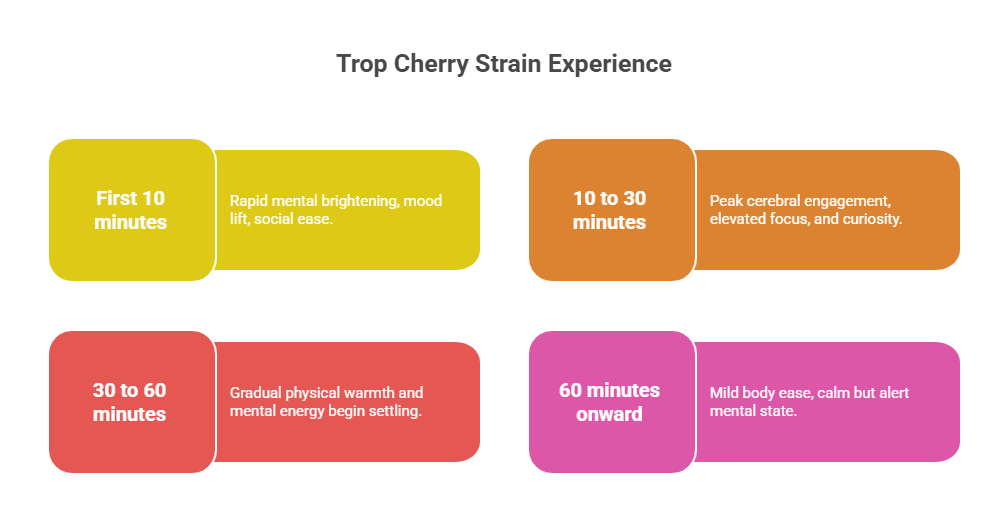
Mapping the Trop Cherry Strain Experience Across a Full Session
|
Session Phase |
What You Typically Feel |
Best Used For |
|
First 10 minutes |
Rapid mental brightening, mood lift, social ease |
Reactive tasks, conversation, light movement |
|
10 to 30 minutes |
Peak cerebral engagement, elevated focus, and curiosity |
Writing, problem-solving, and outdoor activity |
|
30 to 60 minutes |
Gradual physical warmth and mental energy begin settling |
Winding down a creative session, stretching |
|
60 minutes onward |
Mild body ease, calm but alert mental state |
Transitioning to rest or a lighter activity |
Why This Cultivar Won a Cannabis Cup and What That Tells You About Consistency
A Trop Cherry entry took first place in the Hybrid classification at the High Times Cannabis Cup Michigan: People’s Choice Edition in 2022. What a patient-voted award like this tells you is that the experience holds up under direct comparison against a broad field of competitors in the same moment.
It is not a lab result or a marketer’s claim. It reflects what a large group of experienced cannabis consumers found most impressive when evaluating cultivars side by side.
Consistency is what most patients actually care about, and this cultivar delivers it when it is grown well and stored properly. At Hamilton’s Bud and Bloom, we ask about harvest dates and evaluate terpene integrity before our Trop Cherry flower hits the shelf.
You can browse our current flowers in our shop to see what is available, or ask your budtender about the freshest batch when you come in.
Conclusion
The Trop Cherry strain is one of the most rewarding daytime cultivars on the Oklahoma medical menu when it is handled correctly from cultivation through to your session.
Its sativa experience outperforms its genetic split, its linalool content provides a precision safety net for sensitive patients, and its Cannabis Cup recognition reflects patient-verified quality.
At Hamilton’s Bud and Bloom, we carry locally sourced flowers from Oklahoma growers and evaluate every batch before it reaches the shelf. Stop by 1350 E Kenosha St in Broken Arrow or contact us to get any additional information.
Our budtenders are ready to help you find the freshest batch whenever you arrive!
FAQs
Why does this cultivar sometimes smell like nutmeg or pine instead of cherry?
That is a phenotype expression difference rather than a quality issue. Beta-pinene can come forward more strongly in some grows, shifting the aroma toward woody pine while the cherry and citrus notes recede.
Does linalool actually change how a sativa feels?
Yes. Linalool has documented calming properties that specifically work on anxious mental states. In a sativa-leaning cultivar, it softens the overstimulating edge without reducing the energizing quality.
How long do the effects of the Trop Cherry strain typically last?
Most patients report the primary energizing phase lasting 45 to 75 minutes, followed by a gentler settling period. The total session usually runs two to three hours before the effects fully resolve.
Is this a good cultivar for patients who get anxious with sativas?
It depends on your sensitivity level. The linalool and caryophyllene content provides more grounding than most sativa-leaning cultivars. Starting with a small amount and giving yourself 15 minutes to assess before continuing is the right approach.
What makes Relentless Genetics' approach different from other breeders?
They specifically select and preserve only the most expressive phenotypes from each cross without releasing the full genetic range. That selective pressure is why Trop Cherry’s terpene expression is more consistent across batches than many other modern cultivars.