
Sativa lovers have a credibility problem with modern cannabis genetics. The category that is supposed to deliver clear-headed energy and functional focus has been so thoroughly hybridized that most strains labeled sativa are barely distinguishable from their indica-leaning counterparts by effect.
The White Durban strain is the exception that makes this problem visible. A cross between White Fire OG and Durban Poison, it carries a pure African landrace parent that has not been diluted through ten generations of commercial breeding.
If you have been disappointed by sativas that promise energy and deliver sedation, this is the cultivar worth understanding.
The Genetic Tension That Makes This Cross Perform So Well
White Fire OG is a hybrid with significant indica influence from Fire OG and The White. Crossing it with a pure landrace sativa like Durban Poison should theoretically produce a muddled result. The reason it does not comes down to terpene dominance.
Durban Poison is one of the few cannabis cultivars with terpinolene as its lead terpene at naturally high concentrations. Terpinolene is assertive enough to establish the character of a cross even when the other parent carries a more sedating genetic foundation.
The White Fire OG parent contributes resin density and structural potency that Durban Poison alone does not consistently achieve in commercial cultivation. The cross captures the clean, driven mental clarity of the landrace parent and amplifies it with the cannabinoid output of a more domesticated genetic line.
What Durban Poison’s Landrace Status Contributes to Your Session
Most sativa cultivars you encounter are crosses of other crosses, meaning the original landrace character has been through multiple generations of dilution.
Durban Poison, selected from South African genetics where the environment favored fast-finishing, high-terpinolene plants over centuries, contributes something modern-bred sativas do not replicate: alert, focused mental engagement that does not carry the anxious edge that engineered high-limonene sativas can produce.
Terpinolene produces curiosity, not stimulation. A limonene-heavy sativa can tip into jitteriness or racing thoughts at moderate doses. A terpinolene-dominant cultivar like this one tends to stay within a productive and comfortable range for patients who are sensitive to sativa anxiety.
Why Terpinolene-Dominant Cultivars Age Differently Than What You Might Be Used To
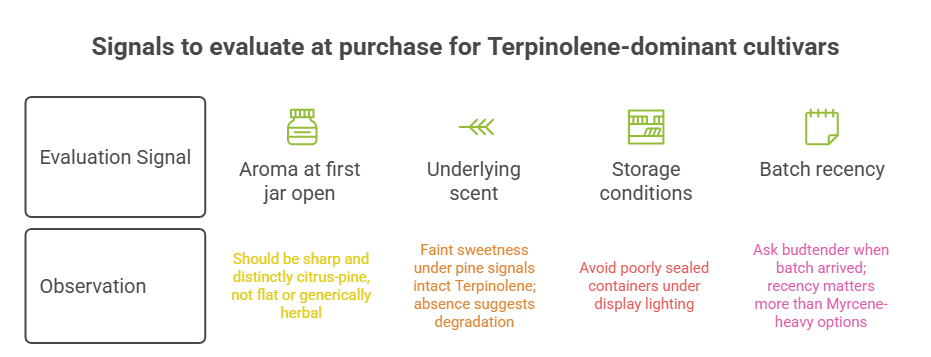
This is practical purchasing guidance that almost no blog covers for this cultivar. Terpinolene is more volatile than myrcene or caryophyllene, degrading faster under heat, light, and oxygen exposure. Fresh stock will be noticeably more expressive than older stock.
Signals to evaluate at purchase:
- The aroma at first jar open should be sharp and distinctly citrus-pine, not flat or generically herbal.
- A faint sweetness underneath the pine signals intact Terpinolene; its absence suggests terpene degradation.
- Avoid purchasing from shelves where the product has been in poorly sealed containers under display lighting.
- Ask your budtender when the batch arrived; recency matters more here than with Myrcene-heavy options.
White Durban Strain Performance in a Specific Daytime Functional Context
The White Durban strain produces its most useful results in a specific cognitive context. Understanding that context helps you get genuine value from the cultivar.
This cultivar performs well for:
- Analytical or problem-solving work where you need to hold multiple variables in mind simultaneously.
- Creative brainstorming where lateral thinking is the goal.
- Physical activity with a coordination or pacing component, like hiking, cycling, or yoga.
- Extended reading or study sessions requiring sustained attention without sedation.
It does not serve tasks requiring pure linear execution, repetitive manual work, or any context where emotional regulation is already strained. The terpinolene-driven alertness amplifies what is already present in your mental state, which means it rewards a calm starting point.
How Introducing This Cultivar Resets Tolerance to Daytime Cannabis
If you have been rotating through modern sativa crosses and finding your usual dose no longer produces the focus and lift you started with, this cultivar offers a pharmacologically different terpene pathway.
Because terpinolene-dominant cultivars are underrepresented in most dispensary catalogs, patients who have built tolerance through myrcene- and limonene-heavy options find that introducing this cultivar can restore daytime cannabis responsiveness in a way that switching to another modern hybrid does not.
For patients who want sativa-spectrum support in an edible format, the Green Hornet Watermelon Sativa 100 mg Gummies offer extended duration without returning to flower mid-session. The slower onset makes them practical for an afternoon with a defined beginning and end.
Wrap-Up
The White Durban strain earns its reputation among sativa lovers through genetics that trace back to an unaltered African landrace parent selected for exactly the qualities most modern hybrids are trying to replicate.
At Hamilton’s Bud and Bloom, we stock cultivars that deliver on their category’s promise. Browse our full shop for current availability, or visit us in Broken Arrow any time and let our budtenders help you find the sativa-spectrum option that fits your session.
FAQs
Why does White Durban produce less anxiety than other sativas at similar THC levels?
The terpinolene dominance from Durban Poison creates a different mental effect than limonene-heavy sativas. Terpinolene produces engagement and curiosity, which stays within a comfortable range where high limonene at elevated doses can push into jitteriness.
How does the White Fire OG parent affect the experience if it carries indica genetics?
The indica influence from White Fire OG primarily adds resin density and potency. The Durban Poison terpinolene profile is assertive enough to establish the sativa character without being overridden by the indica foundation.
Is the White Durban strain suitable for patients who are new to sativa-dominant strains?
At conservative doses, yes. The absence of a strong limonene spike makes it more forgiving for new patients. Starting with one draw and waiting ten to fifteen minutes before continuing is still the right approach.
What makes this different from other Durban Poison crosses on the market?
The White Fire OG parent adds potency and trichome density that pure Durban Poison does not consistently achieve commercially. Most Durban crosses dilute the landrace character more than this one does.
How long does the functional focus window typically last?
Most patients report ninety minutes to two hours of peak terpinolene-driven clarity before the White Fire OG foundation begins softening the session. The transition is gradual, making it easier to plan around a specific task.