
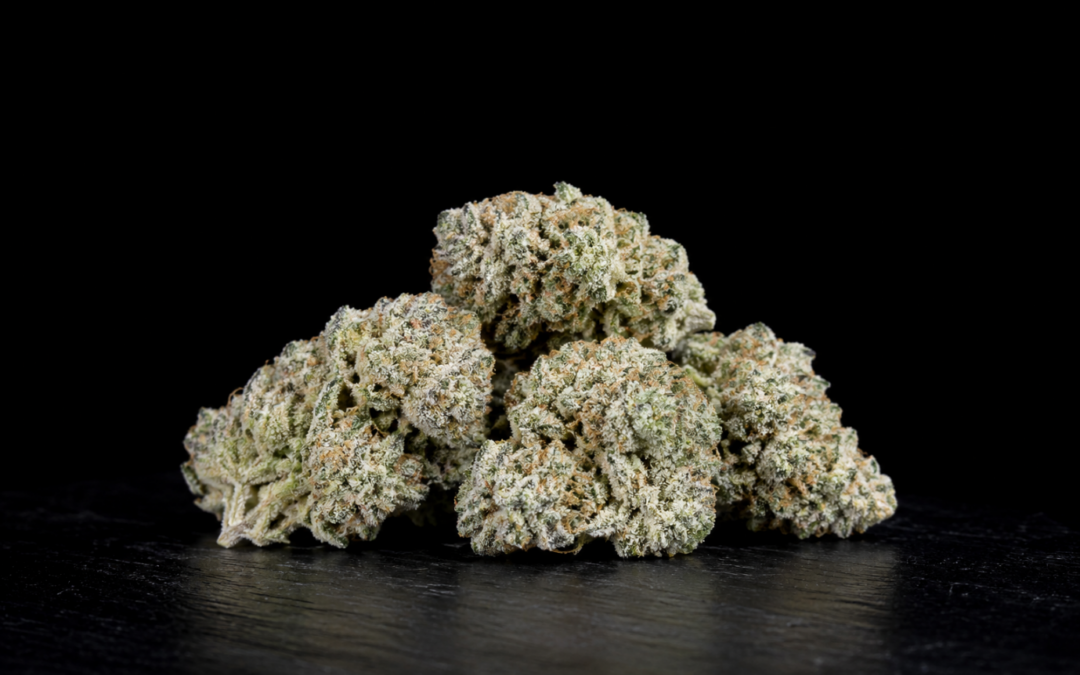
Search for the White Fire OG strain, and you will notice something odd before you even get to the effects: Nobody agrees on what it actually is. Some sources call it a 60/40 indica-dominant hybrid. Others list it as 50/50. A few classify it as sativa-leaning.
At Hamilton’s Bud and Bloom, we think that disagreement is more interesting than any single data point, and it tells you something real about how cannabis genetics work once a cultivar becomes popular enough to spread across dozens of breeders and clone libraries.
Why No Two Sources Agree on This Strain’s Classification
This confusion is not sloppy reporting. It reflects a genuine reality in how White Fire OG was built and propagated. Breeder OG Raskal created the original cross using Fire OG and The White, then selected specific phenotypes from that cross to stabilize and release.
Different cultivators who acquired clones or seeds over the years selected slightly different expressions, which means the White Fire OG growing in one facility may genuinely differ from the White Fire OG growing in another.
That is why you should treat any indica or sativa percentage you see online as a rough average rather than a fixed fact. What matters far more is the terpene profile, which stays more consistent across phenotypes than the indica or sativa label does.
The Pollen Story Behind The White and Why It Changed Breeding
Most strain content treats “The White” as just another parent strain. Its backstory deserves more attention than that. The White is a Triangle Kush phenotype famous for producing almost no visible flowers in early growth, just dense layers of trichomes that make it look frosted in white.
Breeders struggled to clone it reliably for stable genetics, so OG Raskal took an unusual approach: using reversed White clone pollen to fertilize a Fire OG female, creating an entirely new line instead of relying on traditional clone propagation alone.
That pollen-driven method is part of why White Fire OG carries such an unusually dense trichome structure even today. You are tasting the result of a breeding workaround that solved a real cultivation problem.
How One Phenotype Became the Industry Standard
Out of more than 500 seeds grown from the original White Fire OG cross, TLC Collective in Los Angeles identified a single phenotype, numbered 43, as the most complete expression of the strain’s potential.
White Fire #43 became the version most cultivators now treat as the gold standard, prized for cannabinoid levels approaching 30% alongside the dense, frosty resin coverage inherited from The White.
When you ask your budtender about phenotype lineage on a batch of the White Fire OG strain, you are asking a more precise question than simply checking the THC percentage on the label.
Have questions about strain genetics and finding products aligned with your goals? Contact us today for personalized guidance.
What Changes in This Strain Depending on Harvest Timing
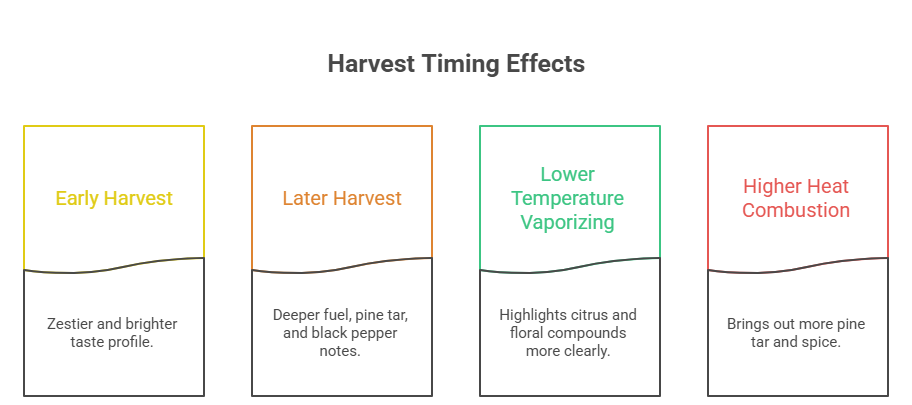
This is a detail almost no consumer-facing guide explains clearly. Aromatics in this lineage shift noticeably depending on when the plant gets harvested.
- Early-harvested batches taste zestier and brighter, with the citrus notes from limonene more forward.
- Later-harvested batches push deeper into fuel, pine tar, and black pepper notes as the plant matures further.
- Vaporizing at lower temperatures around 175 to 190 degrees Celsius highlights the citrus and floral compounds more clearly.
- Combustion at higher heat brings out more pine tar and spice, shifting the experience toward the earthier end.
|
Terpene |
Aroma Contribution |
Effect Association |
|
Myrcene |
Earthy, musky base |
Body relaxation, grounding |
|
Limonene |
Bright citrus, lemon zest |
Mood lift, mental clarity |
|
Caryophyllene |
Peppery, spicy depth |
CB2 receptor engagement, calming |
A Cannabis Cup Win That Confirms What Patients Already Knew
The White Fire OG strain took second place in the Coffeeshops category at the High Times Cannabis Cup in 2017, a recognition built entirely on direct comparison against other entries judged side by side in the same competition.
That kind of patient- and judge-voted result reflects something a lab report alone cannot capture: how the cultivar performs against genuine competition and not in isolation.
If you want to see what is currently on our shelves, explore our flower selection online before your next visit.
Reading Past the Indica and Sativa Label When You Shop
Given everything above, here is the most useful approach when you are deciding whether this cultivar fits your needs.
Ask your budtender about the terpene percentages on the lab report rather than relying on the indica or sativa split printed on the jar.
A batch with limonene leading will likely feel brighter and more functional. A batch where myrcene dominates will likely feel heavier and more sedating, regardless of what label the packaging uses.
Our team at Hamilton’s evaluates each batch of White Fire OG for freshness and terpene balance before it reaches the shelf, so the conversation with your budtender can focus on what the lab data shows instead of guessing from a generic category label.
Wrapping Up
The White Fire OG strain carries a more layered story than most reviews let on, from its unusual pollen-driven breeding origin to the phenotype selection process that shaped the version most patients encounter today.
Understanding that history gives you a sharper set of questions to ask before your next purchase.
Ready to find out what our current batch tastes like? Stop by Hamilton’s Bud and Bloom to ask a budtender what is fresh this week, or talk to our team directly with any questions before you visit.
FAQs
Why do different sources list different THC percentages for this strain?
Phenotype variation across breeders and clone lines means individual batches can test anywhere from the low twenties into the high twenties, depending on growing conditions and genetics.
Is White Fire OG the same as WiFi OG?
Yes, WiFi OG is simply the shortened nickname patients and budtenders commonly use for White Fire OG.
Does the harvest timing change how the high feels?
Yes, earlier harvests tend to feel brighter and more energizing, while later harvests lean heavier and more relaxing due to shifting terpene ratios.
Is this a good strain for new patients?
It can be intense given its potency range, so new patients should start with a very small amount and wait before considering more.
What should I ask my budtender about the White Fire OG strain specifically?
Ask about the terpene breakdown on the lab report, not just the THC number, since that tells you more about how the batch will feel.